From 3mm to 9mm: A Deep Dive into Glass Thickness Standards

When you pick up a glass bong, the first thing you notice is the weight. That heft—or lack of it—isn't just for show. It's a direct measure of quality, durability, and craftsmanship. Glass thickness is one of the most important factors in determining how long a piece will last, how well it performs, and whether it's worth your investment. But what do those numbers—3mm, 5mm, 7mm, 9mm—actually mean? This guide breaks down the entire thickness spectrum, helping you understand what those millimeters really represent and how to choose the right thickness for your needs.
Definition: Glass thickness refers to the measurement of the glass wall, typically expressed in millimeters. A quality piece will have consistent thickness throughout—from the base to the tube to the mouthpiece.
How It's Measured: Manufacturers use calipers to measure at multiple points. Consistent readings indicate quality craftsmanship; wild variations suggest rushed production or poor skill.
Why It Matters:
- Durability and impact resistance: Thicker glass can withstand bumps, drops, and daily wear.
- Thermal shock resistance: The ability to handle sudden temperature changes (ice to flame) without cracking.
- Overall feel and stability: Heavier pieces sit more solidly and feel more substantial in hand.
- Long-term value: A properly thick piece can last for years, even decades.
Every thickness has its place. Here's what each range offers—and where it falls short.
Typical Use: Small hand pipes, cheap import bongs, beginner pieces
Pros: Lightweight, affordable, easy to handle
Cons: Prone to breakage, low thermal shock resistance, feels "tinny"
Best For: Occasional use, careful users, those on a tight budget
What to Watch For: Thin spots, especially at joints
Typical Use: Mid-range production pieces, basic daily drivers
Pros: Decent durability, reasonable weight, affordable
Cons: Still vulnerable to drops and thermal stress
Best For: Regular users who handle their pieces carefully
What to Watch For: Consistency across the piece
Typical Use: Quality daily drivers, premium glass pieces
Pros: Excellent balance of durability and weight, good thermal resistance, feels substantial
Cons: Slightly heavier than thinner options
Best For: Daily users, first "real" bong purchase, all-around use
Industry Note: 5mm is often considered the entry point for "thick glass"
Typical Use: High-end production pieces, social bongs, shop display pieces
Pros: Exceptional durability, great thermal shock resistance, substantial feel
Cons: Noticeably heavier, higher price point
Best For: Social smokers, clumsy users, those who want peace of mind
Industry Note: 7mm is the standard for premium glass
Typical Use: Commercial pieces, shop testers, collectors, ultimate durability seekers
Pros: Near-indestructible for normal use, maximum thermal resistance, monumental feel
Cons: Very heavy, highest price point, can be cumbersome
Best For: Dispensary displays, heavy social use, collectors
Industry Note: 9mm+ is overkill for most users but offers ultimate peace of mind
A piece might claim to be "7mm thick," but if that thickness is only in the base while the tube is paper‑thin, the claim is misleading. Even distribution is what separates quality from marketing hype.
The Problem with Inconsistent Thickness: Weak points develop at joints, bases, or curves—exactly where stress concentrates. A thin spot at the neck is a break waiting to happen.
What to Look For:
- Base thickness: Should be equal to or greater than the tube (the base takes the most impact).
- Joint reinforcement: Extra material at downstem and mouthpiece connections.
- Gradual transitions: No abrupt changes in thickness.
How Quality Manufacturers Ensure Consistency:
- Precision gathering techniques
- Multiple measurement checkpoints during production
- Skilled glassblowers who understand how material flows
Thicker glass handles rapid temperature changes better. Ice in a 3mm bong can cause cracks; 7mm+ handles the transition with ease.
Thicker glass produces a lower‑frequency, more satisfying "thud" when tapped. Thin glass rings like a bell—a sign of stress.
Heavier pieces have lower centers of gravity, reducing tip‑overs during use or cleaning.
Thicker walls stay cooler to the touch during long sessions, improving handling comfort.
Thicker isn't automatically better for everyone. Here's what you give up as you move up the thickness scale.
| Factor | 3-4mm | 5mm | 7mm | 9mm+ |
|---|---|---|---|---|
| Weight | Very light | Moderate | Heavy | Very heavy |
| Portability | Excellent | Good | Fair | Poor |
| Ease of handling | Very easy | Easy | Manageable | Can be cumbersome |
Aesthetic Limitations: Some intricate designs—like delicate color work or complex percs—are harder to execute in ultra‑thick glass. If artistry is your priority, 5‑7mm often offers the best canvas.
Don't just take a seller's word for it. Here's how to check for yourself.
- Visual inspection: Look at the rim of the mouthpiece and the base edge—you can often see the wall thickness directly.
- The weight test: A heavier piece generally indicates thicker glass. Compare to similar‑sized pieces if possible.
- The tap test: Flick the glass gently. A clear, resonant ring indicates well‑annealed thick glass. A dull thud may suggest thin walls or poor annealing.
- Ask for specifications: Reputable brands provide exact thickness measurements (e.g., "7mm tube, 9mm base").
- Beware of "thick" marketing: Some pieces have thick bases but thin tubes—verify consistency.
You smoke a few times a month and handle your pieces carefully. 3‑4mm is sufficient—just be mindful of temperature changes.
You use your piece every day and want something reliable. 5mm offers the best balance of durability and usability.
You share with friends, and pieces get passed around. 7mm can survive group sessions and minor accidents.
Your piece is as much art as function. 9mm makes a statement and will last a lifetime—but be prepared for the weight.
You take your piece on the go. Consider 4‑5mm with a protective case—ultra‑thick is too heavy for travel.
Phoenix Star's Thickness Philosophy
At Phoenix Star, we believe thickness should be purposeful, not just a marketing number. That's why we offer:
- 5mm Standard Series: Our daily drivers—perfect balance of durability and weight for most users.
- 7mm Premium Series: Built for social smokers and those who want extra peace of mind without going overboard.
- 9mm Heavy-Duty Series: For collectors, shops, and anyone who wants the ultimate in durability.
Our Quality Control: Every piece is measured at multiple points to ensure consistent thickness. We reinforce joints and bases where stress concentrates, and we anneal for 48+ hours to eliminate internal stress. The result? Glass that not only feels substantial but performs that way for years.
Featured Examples:
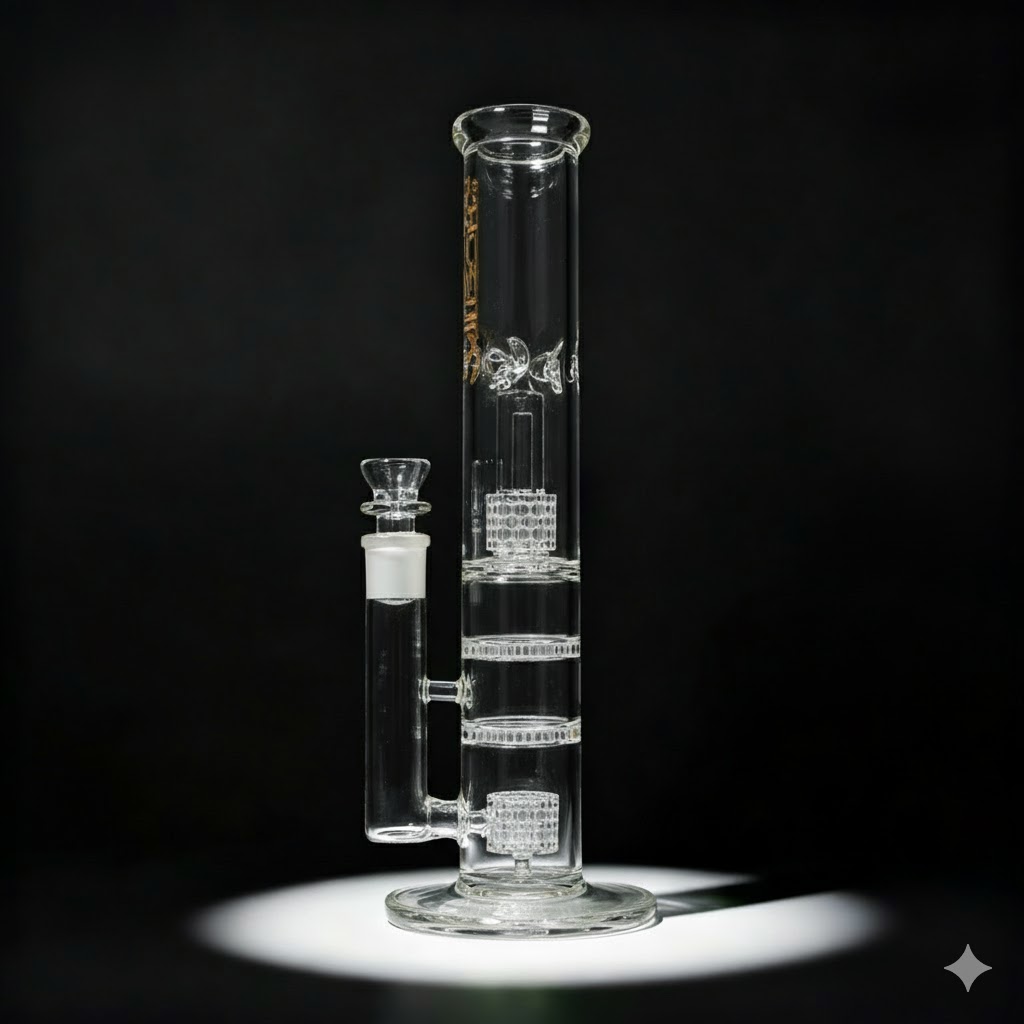
- 14" Straight Tube with 4 Perc (5mm) – the ideal all‑arounder
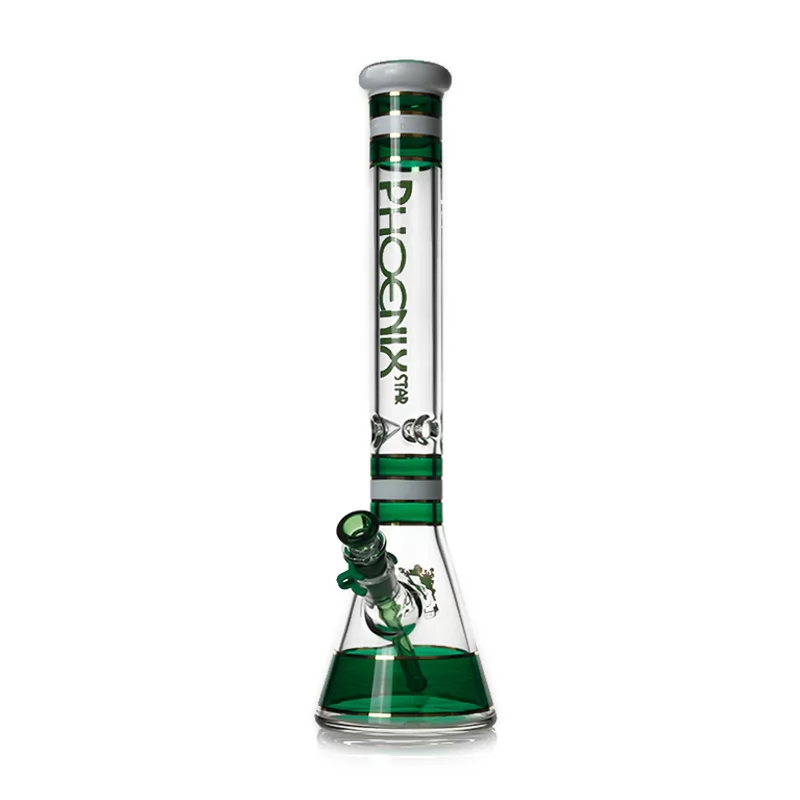
- 18" Beaker Bong (7mm) – built for group sessions
- 12" Heavy Duty Bong (9mm) – a true heirloom piece


Glass thickness is a critical factor, but it's not the only one. Joint construction, annealing quality, and overall design matter just as much. The right thickness for you depends on how you use your piece, who you share it with, and what you value most—portability, durability, or artistry.
Remember: thicker isn't automatically "better." It's about finding the right tool for your lifestyle. A 5mm daily driver will serve most users perfectly. A 7mm social piece adds confidence for group sessions. And a 9mm collector's piece is a statement that will last generations.